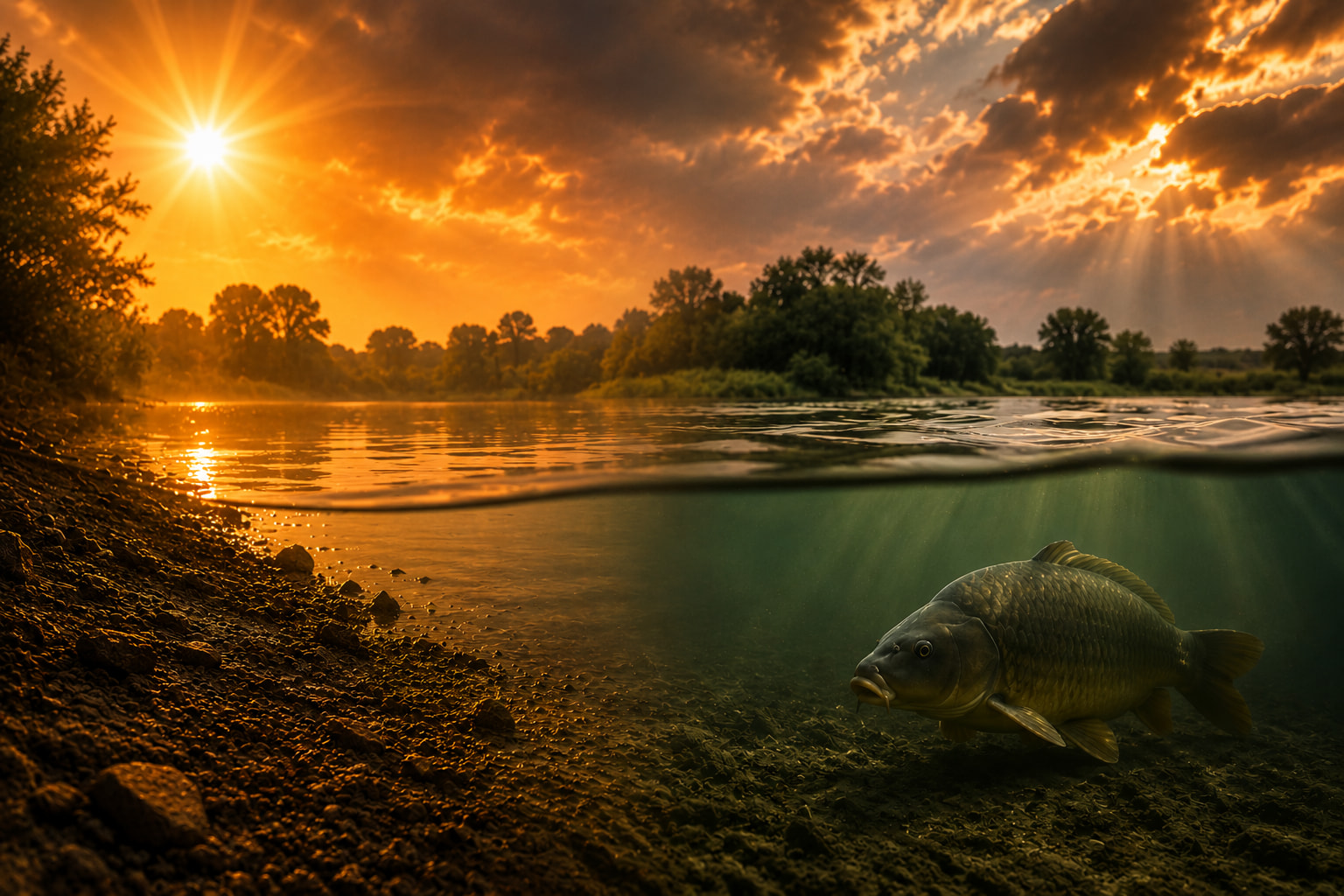
With another heatwave hitting the UK, it’s a question that comes up every summer: should we really be fishing in these conditions?
Personally, I don’t enjoy it. From my experience, the effort-to-reward ratio just isn’t there. The fish often become lethargic, spend long periods cruising or sitting in the upper layers, and feeding windows can be incredibly short. You can put in a huge amount of work for very little return.
But beyond whether it’s enjoyable, there’s a bigger question.
Is It Fair on the Fish?
As water temperatures rise, dissolved oxygen levels naturally fall. Carp are hardy fish, but they still experience increased stress when oxygen levels are low. Add the pressure of being hooked, played and handled, and it makes you wonder whether we’re putting unnecessary strain on them.
This is especially relevant on busy day-ticket waters where every peg is occupied. On some venues, fish can be caught multiple times in a day, with very little chance to recover. During prolonged hot weather, that repeated pressure can’t be ideal.
Every Water Is Different
Of course, not all fisheries are the same.
Some lakes have excellent aeration systems, flowing water, or naturally maintain good oxygen levels. Others are shallow, heavily stocked, and can become difficult environments for fish during prolonged periods of hot weather.
Because of that, there’s no one-size-fits-all answer. Many fishery owners monitor water quality closely and will temporarily close their waters if conditions become unsafe. Others may not need to because their lakes continue to provide suitable conditions.
Sometimes Giving the Fish a Break Makes Sense
For me, I’d rather leave the fish alone during the hottest part of a heatwave, particularly on heavily pressured venues. There’s always another day to fish, and missing a session or two seems like a small sacrifice if it reduces stress on the stock.
Early mornings, late evenings, or waiting until temperatures drop again often make for far more enjoyable fishing anyway.
What’s Your View?
Do you still fish throughout a heatwave, or do you give it a miss until conditions improve?
Have you noticed changes in fish behaviour during extreme temperatures? And do you think fisheries should consider temporary closures when water temperatures and oxygen levels become a concern?
It would be interesting to hear how everyone approaches it.