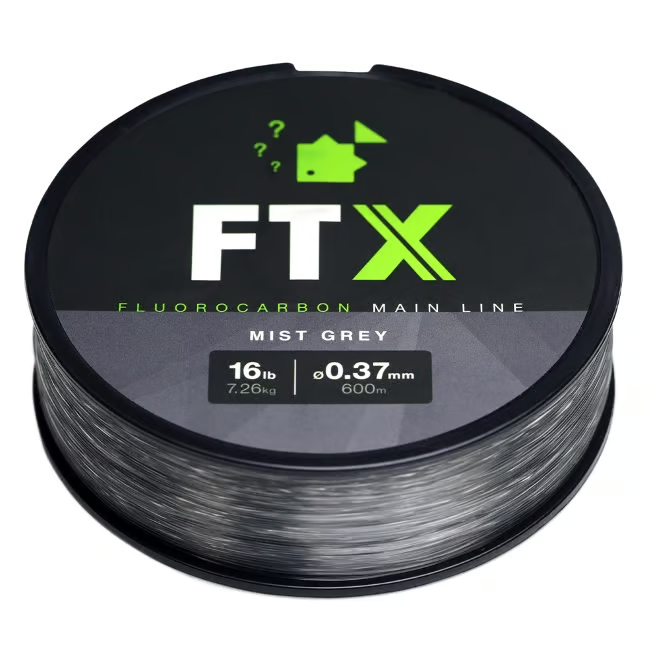
If you’ve spent any time around carp anglers, you’ll have heard the debate:
“Should I switch to fluorocarbon?”
Some anglers won’t fish without it, claiming it’s the closest thing to making your line disappear. Others think it’s expensive, stiff and unnecessary.
The truth sits somewhere in the middle.
Fluorocarbon can be one of the best main lines available in certain situations, but it isn’t the perfect solution for every lake. Understanding when and where to use it is what makes the difference.
What Is Fluorocarbon?
Unlike traditional monofilament, fluorocarbon is made from polyvinylidene fluoride (PVDF).
This material has several unique properties that make it attractive for carp fishing:
-
Almost invisible underwater
-
Much denser than water
-
Sinks extremely well
-
Highly abrasion resistant
-
Doesn’t absorb water
-
Very little stretch (compared to mono)
Because of these characteristics, fluorocarbon behaves very differently to standard nylon line.
Why Do Carp Anglers Use Fluorocarbon?
1. It Sinks Better Than Almost Anything
One of fluorocarbon’s biggest advantages is density.
It naturally wants to lie on the lakebed without relying heavily on back leads or tungsten putty.
This means:
-
Less line suspended through the water
-
Less chance of fish touching the line
-
Better presentation
-
Improved line concealment
On pressured lakes this can genuinely make a difference.
2. It’s Extremely Difficult for Fish to See
Fluorocarbon’s refractive index is much closer to water than nylon.
This means light bends through it differently, making it significantly less visible underwater.
No fishing line is truly invisible.
However, fluorocarbon is considerably harder for carp to detect, especially in:
-
Clear gravel pits
-
Spring-fed lakes
-
Shallow margins
-
Gin-clear winter water
Many anglers specifically spool fluorocarbon before winter because visibility becomes much higher as weed dies back.
3. Excellent Abrasion Resistance
Carp rarely fight over open water.
Instead they’ll head straight for:
-
Gravel bars
-
Mussel beds
-
Tree roots
-
Snags
-
Reed beds
-
Rocks
Fluorocarbon handles abrasion exceptionally well.
While no line is indestructible, it generally survives rubbing against rough surfaces better than many monofilaments.
Always check the last few metres after every fish.
4. Better Bite Indication
Because fluorocarbon stretches less than mono, you often receive:
-
Better drop-back indication
-
Sharper takes
-
Improved feel when playing fish
-
Better contact at range
It’s not as direct as braid, but it’s noticeably more responsive than traditional nylon.
The Downsides of Fluorocarbon
No line is perfect.
Fluorocarbon comes with several compromises.
It Is Stiff
The biggest complaint.
Because the material is naturally harder than nylon it wants to retain its shape.
This can lead to:
-
Line springing off the spool
-
Coiling
-
Reduced casting distance
-
More difficult handling
Quality fluorocarbons reduce this problem considerably, but it never completely disappears.
Casting Distance Is Reduced
If your fishing regularly involves 140-yard casts, fluorocarbon probably isn’t your best choice.
The stiffness creates more friction leaving the spool.
Many anglers notice around:
- 5-15% loss in casting distance
Sometimes more depending on the reel and line diameter.
It’s More Expensive
Fluorocarbon isn’t cheap.
A premium spool often costs two or three times more than good monofilament.
However, because it lasts well and absorbs virtually no water, many anglers leave it on their reels much longer.
Knot Tying Requires More Care
Fluorocarbon doesn’t forgive poor knots.
Incorrect knots can slip.
Always:
-
Lubricate thoroughly
-
Tighten slowly
-
Trim tags neatly
-
Test every knot hard before fishing
Many anglers prefer:
-
Grinner Knot
-
Palomar Knot
-
Mahin Knot
Fluorocarbon vs Monofilament
| Feature | Fluorocarbon | Monofilament |
|---|---|---|
| Visibility | Excellent | Good |
| Sinking | Excellent | Fair |
| Stretch | Low | Medium |
| Abrasion resistance | Excellent | Good |
| Casting distance | Good | Excellent |
| Cost | High | Low |
| Handling | Stiff | Soft |
Fluorocarbon vs Braid
| Feature | Fluorocarbon | Braid |
|---|---|---|
| Visibility | Very Low | High |
| Stretch | Low | Almost None |
| Sinking | Excellent | Depends on braid |
| Abrasion | Excellent | Variable |
| Casting | Good | Excellent |
| Weed cutting | Average | Excellent |
| Shock absorption | Good | Poor |
Best Situations for Fluorocarbon
Fluorocarbon really shines when fishing:
Clear Gravel Pits
Probably its ideal environment.
Low visibility and excellent sinking help produce discreet presentations.
Pressured Day Ticket Lakes
Carp that have seen thousands of rigs often react to lines crossing their patrol routes.
Keeping everything pinned down can result in extra bites.
Winter Fishing
Clear water means fish can inspect everything much more closely.
This is when fluorocarbon often comes into its own.
Fishing Slack Lines
If you prefer fishing with:
-
Slack lines
-
Semi-slack lines
-
Drop-off indicators
Fluorocarbon naturally hugs the contours of the lake bed.
When Fluorocarbon Isn’t the Best Choice
You might be better choosing mono or braid if:
-
You’re casting over 120-140 yards regularly.
-
You’re fishing very weedy venues.
-
You need maximum casting distance.
-
Budget is important.
-
You’re new to carp fishing.
Choosing the Right Breaking Strain
General guide:
10-12lb
Ideal for:
-
Small lakes
-
Winter fishing
-
Clear waters
-
Smaller carp
15lb
Probably the best all-round option.
Suitable for:
-
Most UK day-ticket lakes
-
Fish into the mid-30s
-
Moderate weed
-
General carp fishing
18-20lb
Better for:
-
Large carp
-
Heavy snags
-
Big pits
-
Continental venues
Tips for Fishing Fluorocarbon
Wet the spool before first use
A bucket soak before loading helps reduce memory.
Don’t overfill your reels
Leave a couple of millimetres below the spool lip.
This dramatically reduces springing.
Stretch it before fishing
Walk 40–50 metres out with the line clipped up and apply steady pressure.
This removes much of the initial memory.
Check the final few metres regularly
Despite excellent abrasion resistance, gravel and zebra mussels can still damage any line.
Replace less often
Unlike nylon, fluorocarbon absorbs virtually no water.
Many anglers comfortably fish it for an entire season if it’s looked after.
Common Myths
“It’s Invisible”
False.
It’s simply much harder to see.
In crystal-clear water it can still be visible under certain light conditions.
“Carp Can’t Detect It”
Also false.
Fish can still feel line tension.
Fluorocarbon simply reduces the chances of them seeing the line.
“It’s Stronger Than Mono”
Not necessarily.
Breaking strain depends on the manufacturer.
Fluorocarbon generally excels through abrasion resistance rather than outright strength.
“It’s Impossible to Cast”
Not true.
Modern fluorocarbons cast surprisingly well when matched with:
-
Large pit reels
-
Correct line diameter
-
Proper casting technique
Is Fluorocarbon Worth It?
If you regularly fish:
-
Clear water
-
Pressured carp
-
Gravel pits
-
Winter venues
-
Slack-line tactics
then fluorocarbon can offer genuine advantages.
If your fishing revolves around extreme-distance casting, heavy weed, or snaggy rivers, a quality monofilament or braid may be the more practical option.
Like any piece of tackle, fluorocarbon isn’t a magic bullet. Used in the right situation, though, it can be one of the most effective tools in your carp fishing arsenal.
Join the Fluorocarbon Discussion
-
Do you use fluorocarbon as a main line, or just for hooklinks and leaders?
-
Have you noticed more bites after switching from mono?
-
Which fluorocarbon brand has given you the best results?
-
What’s the biggest carp you’ve landed on fluorocarbon, and what breaking strain were you using?
-
Do you fish it tight, semi-slack, or completely slack?
Share your experiences, setups, and any tips you’ve learned—it’s always useful to hear what works on different waters.