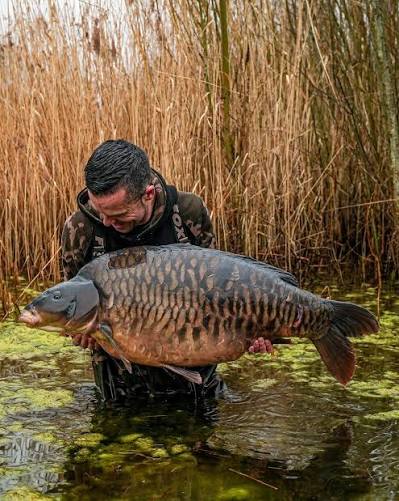
Carp fishing has always had an obsession with weight.
Twenty-pounders became thirties.
Thirties became forties.
Forties became fifties.
Every new milestone eventually seems to become normal.
There is nothing wrong with wanting to catch a big carp.
For many anglers, targeting exceptional fish is a major part of the challenge.
The problem is when weight becomes the only thing that matters.
A beautiful old twenty-pound common from a difficult estate lake can be an incredible capture.
Yet put it next to a heavily fed forty-pounder from a high-stock commercial water and social media will usually tell you which one receives more attention.
Weight is easy to understand.
It gives us a simple number to compare.
But it tells you almost nothing about the actual capture.
How difficult was the lake?
How much time did the angler put in?
Was it a target fish?
Was it caught from an unusual venue?
What is the history of the carp?
Those things can make a capture far more memorable than the number on the scales.
There is also the danger of fisheries becoming obsessed with growth rates.
More food.
More stocking.
Bigger fish.
More ticket sales.
That approach can work commercially, but carp fishing loses something if every lake starts chasing the same objective.
Not every carp needs to be enormous.
Not every lake needs a forty.
Sometimes a heavily scaled twenty-pound mirror in a quiet old pit is worth far more to the angler holding it than any number on a set of scales.
Perhaps the best carp is simply the one you really wanted to catch.